
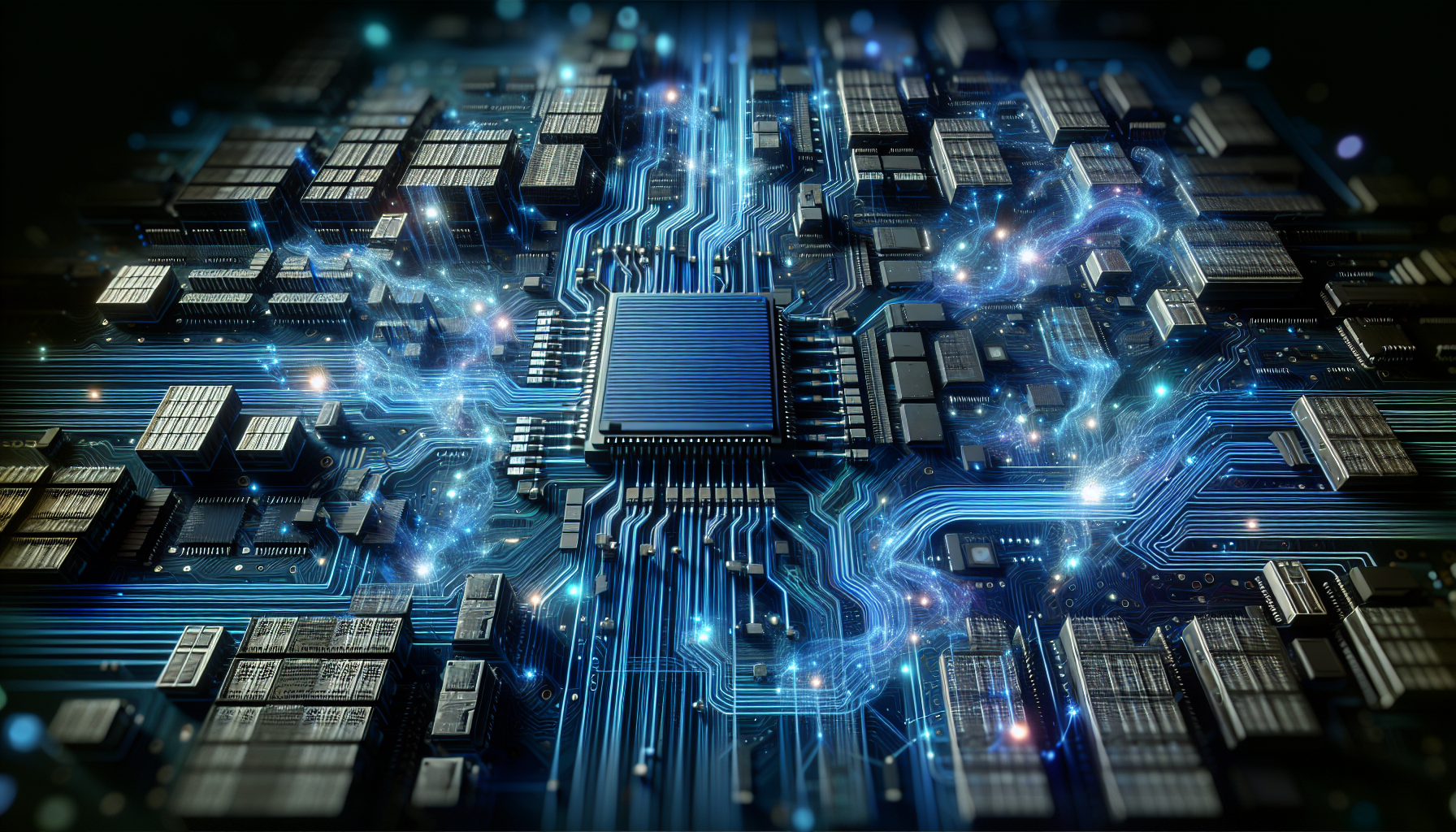
Memory Shortage Crisis Deepens
The global memory chip shortage that has gripped the technology industry shows no signs of abating, with HP Inc. warning that supply constraints could extend well into next year. The computing giant has revised its outlook downward, projecting that the current volatility in memory chip availability will persist through 2027, creating a cascading effect across the entire PC market.
According to HP's latest forecasts, the company anticipates adjusted profits for fiscal 2026 to land at the lower end of its previously issued guidance range of $2.90 to $3.20 per share. This conservative projection reflects the mounting pressures facing not just HP, but the entire personal computing ecosystem as memory chip scarcity drives up production costs and forces manufacturers to make difficult strategic decisions.
AI Data Centers Consuming Critical Supply
The root cause of this prolonged shortage lies in the explosive growth of artificial intelligence infrastructure. Substantial AI data center expansions are consuming a significant portion of available memory chip capacity, effectively redirecting supply away from traditional PC manufacturing. This shift represents a fundamental reallocation of semiconductor resources, as cloud providers and AI companies compete aggressively for high-performance memory modules.
The data center boom has created an unprecedented demand spike for advanced memory technologies, including high-bandwidth memory (HBM) and DDR5 modules. These components are essential for AI workloads that require massive parallel processing capabilities and rapid data access. As hyperscale data centers race to build out their AI infrastructure, they're willing to pay premium prices for memory chips, making it increasingly challenging for PC manufacturers to secure adequate supply at competitive rates.
Industry-Wide Impact Spreads
HP's challenges mirror broader industry trends, with competitors like Dell also grappling with increased costs due to the memory chip shortage. This suggests that the supply constraint is not merely affecting individual companies but represents a systemic issue that could reshape the competitive landscape of the PC market.
The shortage is forcing manufacturers to make strategic trade-offs in their product lines. Some companies may choose to focus on higher-margin business and gaming systems where customers are more willing to absorb increased costs, while scaling back production of budget-oriented consumer devices. This market segmentation could lead to reduced availability of affordable computing options for price-sensitive consumers and emerging markets.
Strategic Response and Market Adaptation
In response to these mounting challenges, HP has implemented several measures to mitigate the impact on its business operations. The company has begun adjusting its supply chain strategies, likely involving diversification of suppliers and renegotiation of existing contracts to secure better terms for available memory chips.
Additionally, HP has implemented price increases across its product portfolio to offset the dual impact of memory chip shortages and recent U.S. tariffs. These pricing adjustments represent a delicate balancing act, as the company must maintain competitiveness while protecting profit margins in an increasingly challenging cost environment.
The supply chain adjustments may also involve closer collaboration with memory manufacturers and potentially longer-term supply agreements that provide more predictable access to critical components, even if at higher costs. Some industry analysts suggest that PC manufacturers may need to redesign certain products to use alternative memory configurations or accept lower memory capacities to maintain production volumes.
Market Outlook and Recovery Scenarios
The projected PC sales decline that HP anticipates reflects broader market dynamics beyond just supply constraints. Consumer demand for traditional PCs has been softening in many markets as smartphone capabilities continue to improve and as many users find their existing systems adequate for basic computing needs.
However, the memory chip shortage adds an additional layer of complexity by potentially creating artificial scarcity that could drive up prices and further dampen consumer interest. This scenario could create a negative feedback loop where higher prices reduce demand, leading to lower production volumes that make it even more difficult to achieve economies of scale.
Industry Transformation and Future Implications
The current memory chip crisis may accelerate several long-term trends in the computing industry. Manufacturers may increasingly focus on premium segments where margins can absorb higher component costs, potentially leading to a bifurcated market with fewer mid-range options.
Furthermore, this shortage could drive innovation in memory efficiency and alternative computing architectures. Companies may invest more heavily in technologies that require less memory or can operate effectively with lower-specification components.
As the industry navigates these challenges, the memory chip shortage is likely to remain a defining factor in technology markets throughout 2026 and potentially into 2027. The ultimate resolution may depend on when new memory fabrication capacity comes online and whether AI data center demand growth begins to moderate. Until then, companies like HP will need to continue adapting their strategies to operate effectively in this constrained supply environment while preparing for an eventual market recovery.