Revolutionary Speed Meets Medical Precision
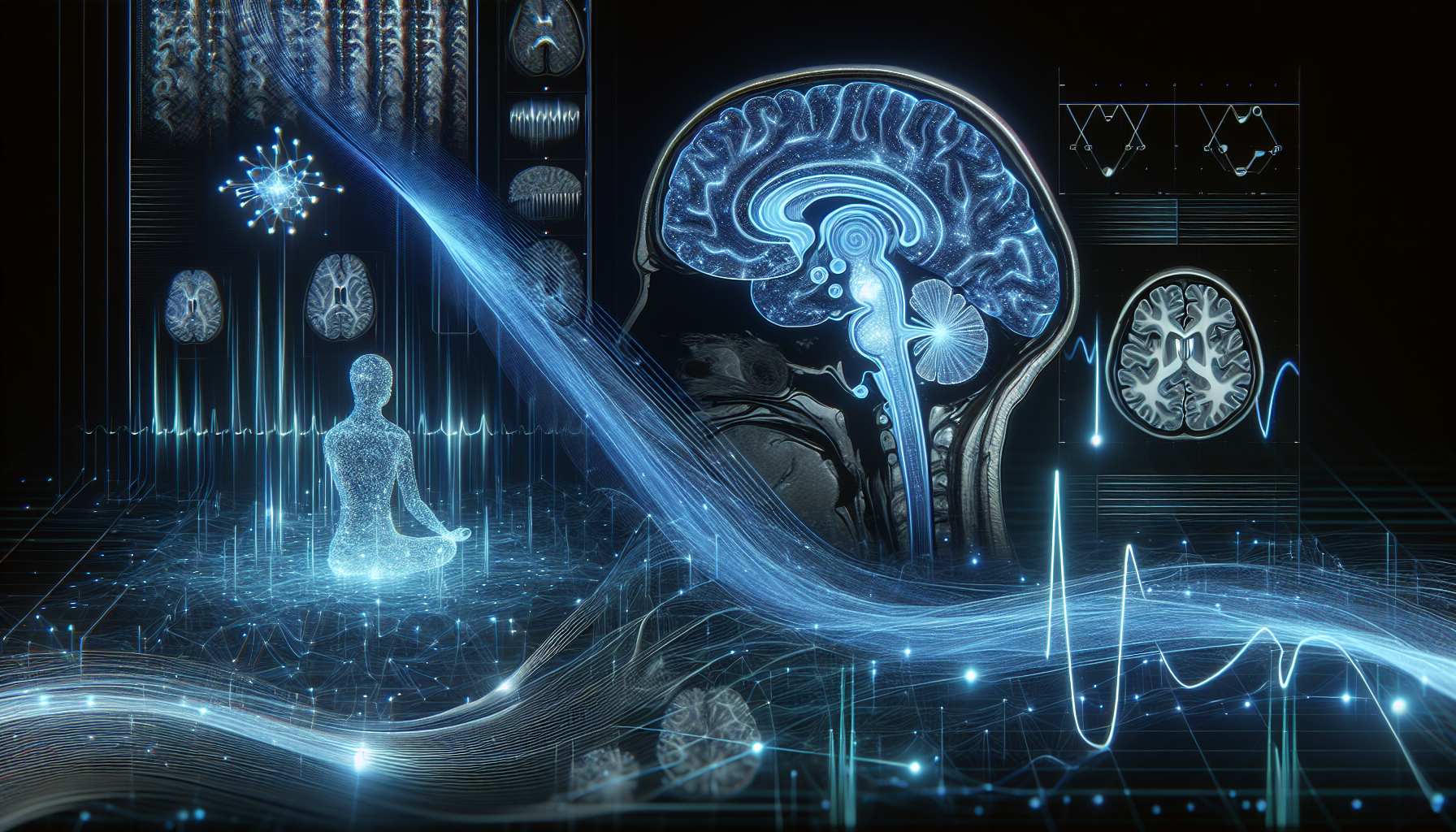
Imagine a world where critical brain conditions are diagnosed in seconds rather than hours or days. The University of Michigan has turned this vision into reality with Prima, an artificial intelligence system that analyzes brain MRI scans with remarkable speed and accuracy. This breakthrough technology represents a seismic shift in medical imaging, promising to transform how physicians diagnose neurological conditions and potentially save countless lives through faster intervention.
Prima's performance metrics are nothing short of extraordinary. The AI system achieves up to 97.5% accuracy in diagnosing over 50 different neurological conditions while completing its analysis in mere seconds. This level of precision, combined with unprecedented speed, positions Prima as a game-changing tool in the medical field where time often means the difference between life and death.
The Science Behind the Breakthrough
The development of Prima represents years of intensive research and data analysis. Published in Nature Biomedical Engineering on February 10, 2026, the study demonstrates the system's capabilities through rigorous testing on more than 30,000 MRI studies conducted over one year. During this extensive evaluation period, Prima consistently outperformed existing AI models, establishing new benchmarks for medical imaging analysis.
The training process behind Prima's success involved an enormous dataset comprising over 200,000 MRI studies and 5.6 million imaging sequences from University of Michigan Health. However, what sets Prima apart from conventional AI diagnostic tools is its comprehensive approach to patient analysis. The system doesn't simply examine images in isolation; instead, it integrates patient medical histories and clinical reasons for scans, mimicking the holistic approach that experienced radiologists employ when making diagnoses.
Senior author Todd Hollon, a neurosurgeon at the University of Michigan, describes Prima as the equivalent of ChatGPT for medical imaging. This comparison highlights the system's ability to process complex information rapidly while maintaining the nuanced understanding typically associated with human expertise. The AI's capability to prioritize urgent cases adds another crucial dimension to its functionality, ensuring that patients requiring immediate attention receive the fastest possible diagnosis.
Transforming Medical Workflows
The implications of Prima's capabilities extend far beyond individual patient diagnoses. Co-first authors Yiwei Lyu and Samir Harake emphasize how the system's rapid turnaround times can significantly improve workflow efficiency in medical facilities. In environments where radiologists often face overwhelming caseloads, Prima's ability to process scans instantly could alleviate bottlenecks that currently delay patient care.
The system's impact on medical workflows becomes particularly significant when considering the global shortage of radiologists and the increasing demand for medical imaging services. Healthcare facilities worldwide struggle to balance the growing need for diagnostic imaging with limited specialist availability. Prima offers a potential solution by augmenting human expertise rather than replacing it, allowing radiologists to focus their attention on the most complex cases while the AI handles routine screenings and provides preliminary assessments.
Furthermore, Prima's ability to prioritize urgent cases could revolutionize emergency medicine. By instantly identifying patients with critical conditions such as strokes, brain tumors, or traumatic brain injuries, the system enables medical teams to initiate treatment protocols immediately, potentially improving patient outcomes significantly.
Beyond Brain Imaging: Expanding Horizons
While Prima's current focus lies in neurological imaging, the research team envisions a much broader application scope. The underlying technology shows promise for expansion into other medical imaging modalities, including mammograms for breast cancer screening, chest X-rays for pulmonary conditions, and ultrasounds for various diagnostic purposes. This versatility suggests that Prima could evolve into a comprehensive medical imaging platform capable of supporting multiple medical specialties.
The researchers are already working on enhancing Prima's capabilities by incorporating electronic medical records into its analysis framework. This integration promises to increase the system's accuracy even further by providing additional contextual information about patients' medical histories, current medications, and previous diagnostic results. Such comprehensive data integration could push Prima's accuracy rates beyond their already impressive 97.5% threshold.
The Future of AI-Powered Medical Diagnostics
Prima's development signals a pivotal moment in the evolution of AI-powered healthcare. As the system undergoes continued evaluation and refinement, its potential to address global healthcare challenges becomes increasingly apparent. The technology could prove particularly valuable in underserved regions where access to specialized radiological expertise is limited, democratizing access to high-quality diagnostic services.
The success of Prima also paves the way for similar AI applications across various medical disciplines. As healthcare systems worldwide grapple with aging populations, increasing disease prevalence, and resource constraints, AI-powered diagnostic tools like Prima offer a path toward more efficient, accurate, and accessible medical care.
Looking ahead, the integration of such advanced AI systems into routine medical practice will likely reshape the entire healthcare landscape. Prima represents not just a technological achievement, but a glimpse into a future where artificial intelligence and human expertise collaborate seamlessly to deliver unprecedented levels of medical care. As this technology continues to evolve and expand, patients worldwide stand to benefit from faster diagnoses, more accurate treatments, and ultimately, better health outcomes.